



Toronto Parking — From Open Streets to Metered City
There was a time when parking in Toronto didn’t cost much, didn’t take much thought, and didn’t feel like part of a…
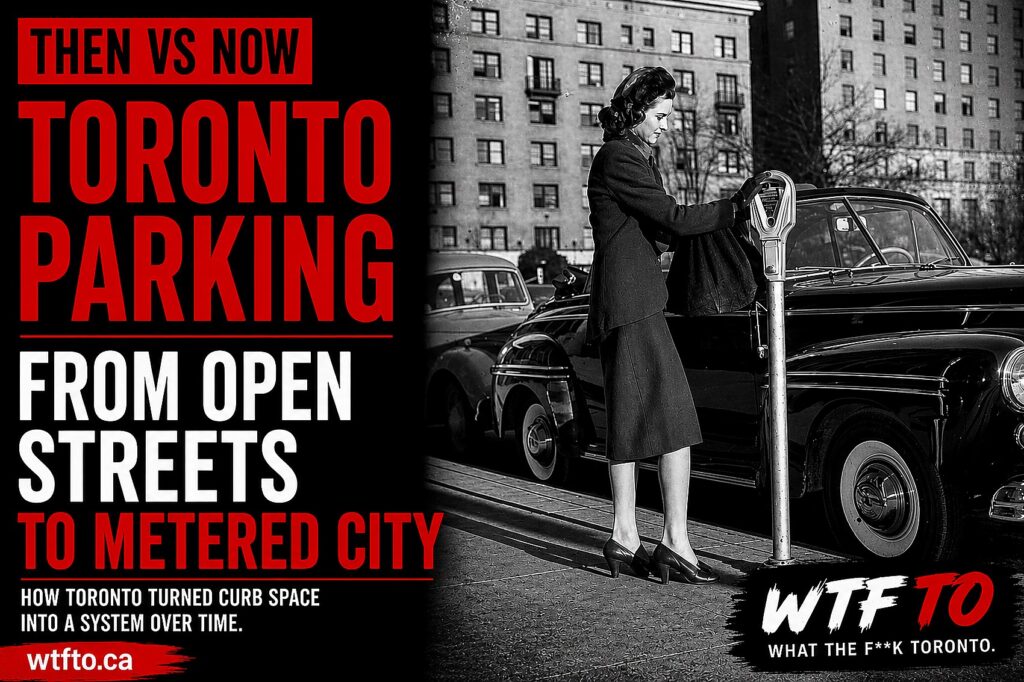
There was a time when parking in Toronto didn’t cost much, didn’t take much thought, and didn’t feel like part of a system at all.
There was a time when parking in Toronto was almost invisible.
In the early 1900s, the city moved at a different pace. Streetcars rattled down the middle of the road, horses still pulled delivery wagons, and pedestrians crossed wherever they pleased. Cars were there, but they weren’t dominant. If you owned one, you simply pulled up along the curb, stepped out, and went about your day.
No coins. No clocks. No worry about how long you’d be gone.
Parking wasn’t something you planned. It was something you did.
And because there were fewer cars, and more room, it worked.
By the 1920s, that ease started to fade.
Cars became more common, not just among the wealthy but among everyday Torontonians. Streets that once felt open began to feel crowded. Along major corridors like Yonge Street, cars lined the curbs, sometimes for hours at a time. What had been convenience slowly turned into competition.
If you drove downtown, you didn’t always know if you’d find a spot. And if you did, there was no guarantee it would still be there when you needed it.
Businesses began to feel it first. Customers couldn’t easily stop in and out. Deliveries became harder. The simple act of parking — once taken for granted — started to affect how the city functioned.
The city’s response was cautious, almost reluctant. Through the 1930s, it introduced basic signs and informal time limits, but enforcement was uneven. Some drivers followed the rules, others didn’t. There was still no sense of a unified system — just a growing awareness that something wasn’t working the way it used to.
Looking back, it was a moment the city could have gotten ahead of. Instead, it drifted with the problem.
By the 1940s, the pressure was unmistakable.
Toronto had grown busier, tighter, more dependent on cars. Curb space — once abundant — had become contested. You could drive in circles looking for a spot, only to find the same cars sitting in place for hours.
Other cities had already started experimenting with a new idea: charging for parking, not to profit, but to force movement.
Toronto hesitated.
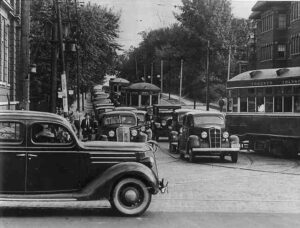
When parking meters finally arrived in the 1950s, they brought something new to Toronto streets: order.
For the first time, there was a rhythm to parking. You dropped a coin — five or ten cents — and in return, you got a set amount of time. Enough to run errands, grab a meal, visit a shop. Not enough to leave your car all day.
It was simple, and people understood it.
In today’s terms, those early rates worked out to well under a dollar an hour. It wasn’t about the money. It was about fairness. Everyone got a turn.
There’s a certain nostalgia in that system now — not just because it was cheaper, but because it felt clear. You knew the rules. You knew the cost. And for the most part, it felt reasonable.
That clarity began to shift in the 1970s.
In 1974, Toronto created the Toronto Parking Authority — the beginning of what most people now know as Green P. Parking was no longer just a row of meters on a street. It became a network, something organized and managed across the entire city.
At the time, it didn’t feel like a major change. Rates were still modest — the equivalent of a couple of dollars an hour today — and the goal still leaned toward service. You parked, you paid, you moved on.
But behind the scenes, something important had happened.
Parking was now centralized. Structured. Scalable.
It had the framework to become something more.
Through the 1980s and 1990s, that system expanded quietly.
More lots appeared. More streets were metered. Rates crept upward — a dollar here, two dollars there — but slowly enough that most people barely noticed. Driving was still the default way to get around, and parking, while not free anymore, didn’t feel like a burden.
There’s a kind of middle-ground nostalgia in this era. Parking wasn’t effortless the way it had been decades earlier, but it also wasn’t something you stressed over. You could still pull into a lot, feed a meter, and get on with your day without thinking twice about it.
The system worked — not perfectly, but well enough.
The real turning point came in the early 2000s, though it didn’t look dramatic at first.
The city replaced old coin meters with pay-and-display machines. Enforcement became more consistent. Technology made everything smoother — easier to pay, easier to track, easier to manage.
At the same time, Toronto itself was changing. Condos rose. Streets filled. The downtown core tightened. Space, especially curb space, became harder to come by.
Parking stopped being just a convenience. It became something you had to think about.
Rates followed that shift, moving into the two- to three-dollar range, then higher in busier areas. Not shocking increases, but noticeable. Enough that parking started to feel less automatic, more deliberate.
By the 2010s, the experience had changed again.
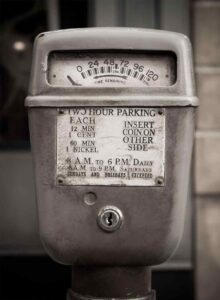
The system was no longer just responding to demand — it was shaping it.
And for drivers, the feeling was different.
Where parking had once been simple, even casual, it now required attention. You checked signs. You checked time. You checked cost. It wasn’t difficult, but it wasn’t effortless either.
The ease was gone.
Looking back across all of it, the transformation didn’t come in one moment.
It came in stages.
From a time when you could leave your car without a second thought,
to a system where every minute is counted.
Toronto didn’t start with a plan for parking.
It adapted, adjusted, and expanded — sometimes too slowly, sometimes without fully deciding what it wanted parking to be.
And in doing so, it changed not just how the system works,
but how it feels to use it.
I am not sure where you are getting your information, but great
topic. I needs to spend some time learning much more
or understanding more. Thanks for magnificent info I was looking for this info for my mission.