



Toronto’s Lost Movie Palaces
Before condos, streaming, and half-empty multiplexes, Toronto went to the movies one neighbourhood at a time. Toronto Went to the Movies There…
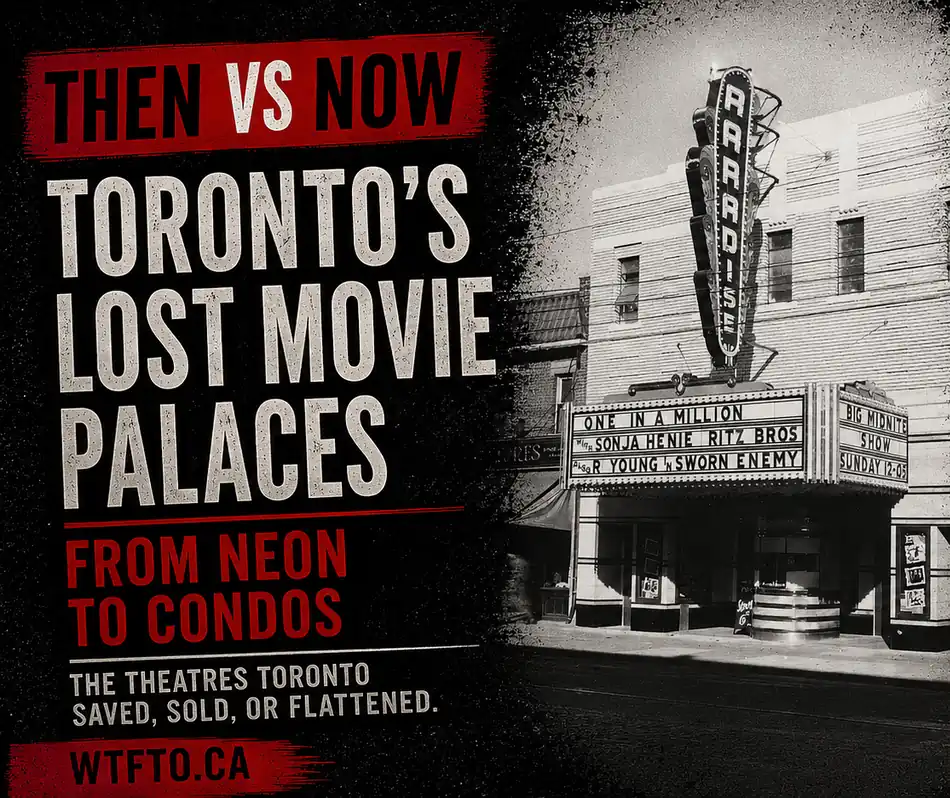
Before condos, streaming, and half-empty multiplexes, Toronto went to the movies one neighbourhood at a time.
Toronto Went to the Movies
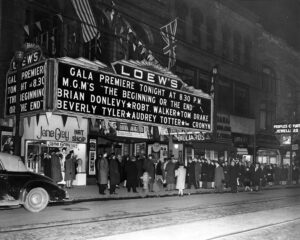
There was a time when going to the movies in Toronto meant more than buying a ticket. It meant walking under a glowing marquee on Bloor, Yonge, Eglinton, Roncesvalles, or Queen. It meant first dates, Saturday matinees, kids with popcorn, parents with a night out, and grandparents remembering the same seats from decades earlier. These theatres were not just places to watch films. They were neighbourhood landmarks, meeting spots, weather shelters, memory machines, and bright little promises that the city still had somewhere to gather after dark.
On a typical night, especially through the 1940s, 1950s, and into the 1960s, the local theatre was part of the rhythm of the neighbourhood. The lights came on outside before sunset, the marquee announced the week’s picture, and people drifted in after dinner or packed the Saturday matinee with kids, coins, candy, and noise. Big films could feel like events, with long lineups, printed programs, ushers, curtains, balconies, and sometimes an intermission that gave everyone a chance to stretch, smoke, talk, or race back for more popcorn before the second half started. For a few hours, the street outside disappeared. Toronto sat together in the dark, watching cowboys, musicals, war pictures, romances, monsters, newsreels, cartoons, and whatever dream Hollywood had shipped north that week.
Toronto’s Vanishing Movie Palaces
The decline did not happen overnight. Toronto’s old theatres did not all close because people suddenly stopped loving movies. They closed because the city around them changed. By the 1950s and 1960s, television was pulling people back into their living rooms. By the 1970s and 1980s, suburban malls and multiplexes were changing how people watched films. One big screen on a neighbourhood main street started to look old-fashioned beside a new complex with several screens, easier parking, louder sound, and more showtimes. The local movie house, once the centre of the evening, slowly became harder to fill.
At the same time, Toronto land was becoming too valuable for sentiment. A theatre was a big building sitting on prime street frontage, often in exactly the kind of neighbourhood developers wanted next. The marquee might have meant memories to the people who grew up there, but to owners, buyers, and builders, the same property could mean retail, condos, offices, or a cleaner balance sheet. That was the beginning of the end: not one dramatic collapse, but a long, quiet shift where the city started seeing old theatres less as gathering places and more as real estate waiting for a better return.
Still Standing, But Not as Theatres
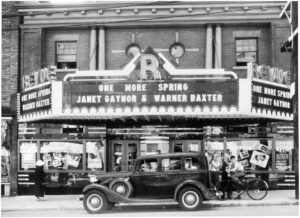
The Runnymede Theatre is one of the clearest examples. Built in 1927 in Bloor West Village, it once operated as a vaudeville and movie house and was known as “Canada’s Theatre Beautiful.” Today, the building still stands at 2223 Bloor Street West, but it is no longer a cinema. After years of different uses, including a bookstore, it became a Shoppers Drug Mart. The walls
survived. Some of the old decorative theatre character survived. But the theatre itself, as a living place to watch movies, is gone.
The Eglinton Theatre is another kind of survival story. It was not destroyed, and that matters. Opened in 1936, it became one of Canada’s great Art Deco movie theatres, and Parks Canada recognizes it as one of the best examples of that style in Canadian theatre design. Today, it lives on as the Eglinton Grand, restored and used as an event venue. That is a better fate than demolition, but it still raises the question at the heart of this story: when the building remains but the movies disappear, what exactly did the city save?
These places were not erased like the Uptown. They became ghosts with addresses. You can still walk past them, even walk inside some of them, but you are not entering the same Toronto. What survived was brick, plaster, ornament, and memory. What disappeared was the habit of gathering in the dark with the neighbourhood, watching something larger than life flicker across a screen.
The Movie Palaces That Refused to Die
Not every old Toronto theatre ended as a memory, a pharmacy, or a condo address. A few survived because the building still mattered, the neighbourhood still cared, and someone eventually understood that an old cinema could be more than an antique. It could still be useful. It could still bring people out of their houses. It could still make a main street feel alive at night.
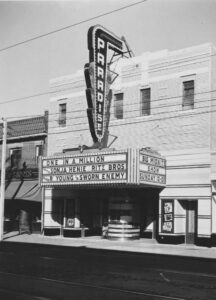
The Paradise Theatre on Bloor is one of the best examples. It first opened as a movie house in the 1930s, later closed for years, and then came back after a major restoration. Today, it is not just a theatre in the old sense. It is a multi-arts venue with films, live events, food, and a restored sense of occasion. Heritage Toronto described its 2019 reopening as a kind of roadmap for how historic theatres can become neighbourhood hubs again. That is what makes Paradise important to this story. It did not just preserve a façade. It brought the idea of the neighbourhood theatre back to life.
The Revue Cinema on Roncesvalles is even more powerful because it still feels like a real local cinema. It is not pretending to be old Toronto. It is old Toronto still operating. The Revue presents itself around community, film, arts, and shared experience, and its own history traces decades of repertory, art-house, classic, Canadian, documentary, and neighbourhood programming. In a city where so many single-screen theatres disappeared, the Revue survived by becoming more than a place that shows movies. It became a place people felt responsible for.
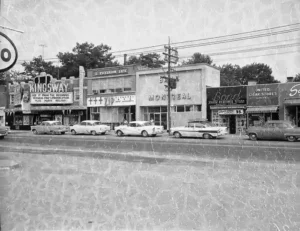
That is why the Kingsway matters here. Unlike the Uptown, it was not erased. Unlike the Runnymede, it did not become retail wearing a theatre costume. Unlike the Eglinton Grand, it did not survive mainly as an event room. It is still a place where people can buy a ticket and watch a movie in a room with memory. The building was designated by the City of Toronto in 2008 for its cultural heritage value as a World War II-era theatre inspired by Art Deco styling, and after a closure in the 2000s, it reopened with its old neighbourhood role still intact.
Toronto loses so many of these places that the ones still operating start to feel like accidents. The Kingsway is not just another surviving theatre. It is proof that a movie palace does not have to become a condo lobby, a pharmacy, or a wedding venue to matter. Sometimes the best preservation is not polishing the ghost. Sometimes it is simply keeping the screen alive.
That is the difference between a building being saved and a place being saved. Paradise and Revue still give Toronto something the city keeps losing: a reason to walk down the street at night, meet other people, sit together in the dark, and feel the neighbourhood gather around one glowing screen. They are not just survivors. They are proof that the old movie palace was never obsolete. Toronto just stopped protecting enough of them.
The Ones Toronto Lost Forever: From Neon to Condos
Some theatres did not survive as event halls, pharmacies, bookstores, or restored neighbourhood landmarks. Some were simply erased. The old marquee came down, the lobby disappeared, the seats were ripped out, and the building itself was replaced by something more profitable, more ordinary, and less memorable. That is where the romance of Toronto’s movie-palace era runs straight into the city’s modern obsession: land value.
The Uptown Theatre is the clearest symbol of that loss. Once one of Toronto’s great movie houses on Yonge Street, it was not rescued like the Paradise, kept alive like the Revue, or repurposed like the Runnymede and Eglinton. It was demolished. And once a theatre like that is gone, there is no real way to bring it back. You can name a condo after what used to be there. You can hang a plaque. You can save a photo in an archive. But the room itself, the scale, the sound, the shared experience, and the feeling of walking in from the street into something grand are gone for good.
That is the real story of neon to condos. Toronto did not just lose old buildings. It lost places where ordinary people gathered without needing a reservation, a membership, or a luxury price tag. The old theatres turned main streets into destinations. Their replacements often turn the same streets into addresses. What used to glow at night now gets marketed in renderings. What used to belong to the neighbourhood becomes another piece of the skyline.
Where They Are Now — and What Toronto Actually Saved
The strange part is that some of Toronto’s old movie palaces are still accessible, just not all in the same way. Some still feel like theatres. Some feel like preserved memories. Some feel like the city saved the walls but forgot what the walls were for.
Paradise and Revue are the clearest examples of survival with a pulse. These are still places where regular people can go, buy a ticket, sit down, and experience something close to what these neighbourhood theatres were meant to be. Paradise has been restored with care, but it has not become some frozen museum piece. It still hosts screenings, events, food, and live programming. It feels like someone understood that the point was not just to polish the old ceiling and admire the plasterwork. The point was to bring people back inside.
The Eglinton Grand is different, but it should not be dismissed. The building survived beautifully. The Art Deco glamour is still there. The scale, the drama, the old theatre presence, the feeling that you are stepping into something grander than the street outside — all of that still matters. But it is no longer the casual neighbourhood movie house where you decide after dinner to catch whatever is playing. Today, it operates mainly as a private and special-event venue: weddings, galas, corporate nights, booked events, formal evenings. The room survived, but the old everyday use did not. Toronto saved the dream, then put it behind a booking package.
Then there is the Runnymede, which may be the most Toronto ending possible. The building still stands at 2223 Bloor Street West. It is recognized as a heritage property. The theatre bones are still there. Some of the old detail still impresses people walking in. But the show is over. The former movie palace is now a Shoppers Drug Mart. Instead of a screen, a balcony crowd, ushers, trailers, matinees, and a Friday night lineup, you get prescriptions, shampoo, snacks, toothpaste, and loyalty points under a historic ceiling.
And that is where the whole story gets both funny and depressing. Because yes, the building was saved. Technically. On paper. Architecturally. But what was saved for the public? The old theatre experience did not survive. The neighbourhood did not get its movie house back. The marquee did not light up again. The seats did not return. The crowd did not gather. People still walk into the building, but now they are walking into a pharmacy with a very dramatic past.
Only in Toronto could a former theatre be “saved” so people can stand where generations once watched epics and now compare sale prices on deodorant.
The Final Punchline
That is the strange afterlife of Toronto’s movie palaces. Some became cultural spaces again. Some became event spaces. Some became retail spaces wearing heritage like a costume. And some, like the Uptown, did not even get that. They were erased completely.
So did Toronto save them? Sometimes. Sort of. Maybe on paper. Heritage rules helped protect some walls, facades, plaster work, and addresses. But the real rescues came from people, communities, operators, owners, programmers, donors, customers, and neighbourhoods that still believed these places were worth using, not just admiring.
Paradise came back because someone invested in bringing it back. Revue survived because a community kept showing up. Eglinton survived as glamour, but not as a regular night at the movies. Runnymede survived as architecture, but not as cinema. Uptown survived only in photographs, memories, and the usual Toronto regret that arrives after the wrecking crews have already done their work.
That may be the honest Then vs Now. Toronto is very good at mourning what it loses after the fact. It is less good at protecting the ordinary magic before it becomes rare, expensive, private, or photogenic enough to care about. The old movie palaces were never just buildings. They were where the city lined up, sat together, escaped together, and walked home under neon.
Some still glow.
Some are ghosts.
Some are now pharmacies with better ceilings than most new condos.
And maybe that is the final punchline: Toronto did save a few of its movie palaces. It just did not always save them for the same people who used to go there.
Should have gone a little further West along Bloor St to just west of Royal York Rd where the Kingsway Movie theatre still stands with its marquee and nightly offerings. A neighborhood that continues to cherish its local movie house.
You’re absolutely right — the Kingsway Theatre deserves to be included. It’s one of the rare neighbourhood movie houses that still stands, still has its marquee, and still gives that stretch of Bloor a real sense of local character.
And this is exactly why reader comments matter. Thanks to readers pointing out examples I may have missed, I can keep adding to the story and make it stronger over time. I’ll be looking at adding the Kingsway Theatre, along with any other overlooked neighbourhood theatres or movie houses that deserve a place in the piece.
I added the Kingsway Theatre because it was somehow overlooked, and it really shouldn’t have been. It’s an important part of Toronto’s cultural history, and it deserves to be included. I made sure it was added where it belongs.
I really love stories from Toronto’s history