Toronto’s Budget Magic Trick
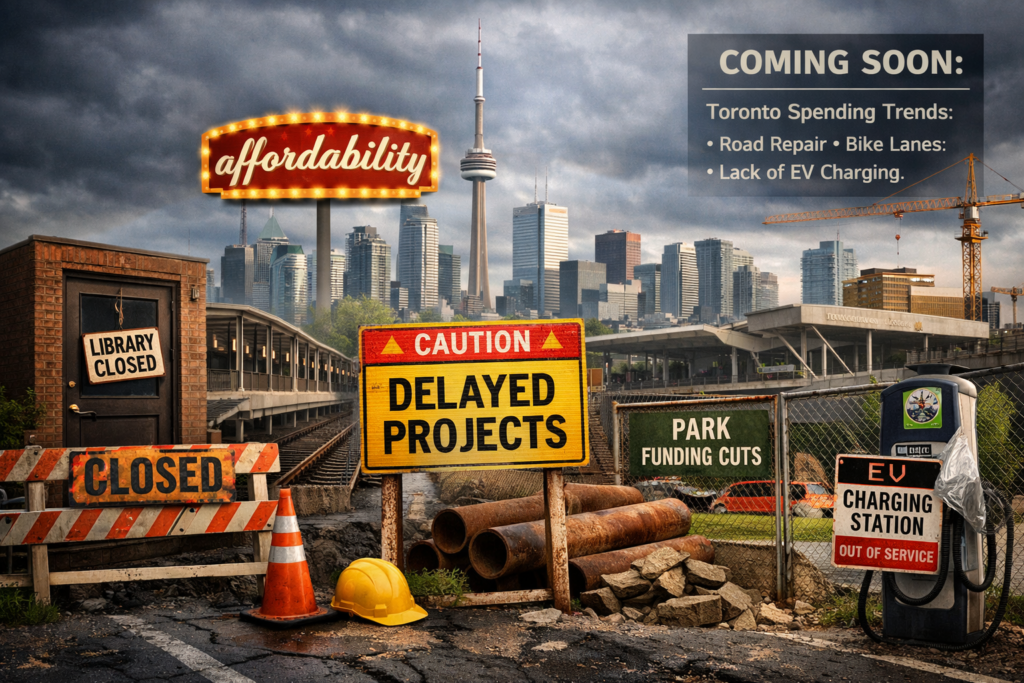
Smile for the Cameras, Lose the Services Later
Toronto’s 2026 budget came wrapped in all the usual political gift paper: affordability, stability, financial sustainability. Nice words. Safe words. Comforting words. The kind of words politicians use when they want residents to stop asking what is actually being cut, delayed, buried, or quietly kicked down the road.
And that is exactly what this looks like.
The city wants residents to focus on the clean, camera-friendly headline: a combined 2.2% residential property tax and City Building Fund increase, sold as responsible, measured, and somehow compassionate. Affordable, they say. Stable, they say. Sustainable, they say.
Right.
Because apparently in Toronto, “affordable” now means the city still gets the growth, the congestion, the density, and the strain on services — residents just do not get the infrastructure that is supposed to come with it.
What a deal.
The headline sounds better than the fine print
Officially, the City of Toronto says the 2026 budget focuses on affordability, reliable frontline services, community safety, and long-term financial sustainability. It also says the city’s 2026–2035 capital plan totals $63.1 billion, the largest 10-year capital plan in Toronto history. On paper, that sounds strong.
But budgets are not just about what gets announced. They are also about what gets delayed.
And in this case, city officials have acknowledged that roughly $300 million in capital plans were deferred because development-charge revenue is slowing. Reported deferrals included about $214 million from parks and recreation, $76 million from libraries, and $6 million from waste.
That changes the story entirely.
Because Toronto is still growing. Developers are still building. Council is still approving density. Residents are still being told this is progress.
But the libraries? Later.
The community centres? Later.
The parks and public infrastructure that are supposed to make a denser city livable? Also later.
And somehow this is being sold as responsible planning.
Growth for you, infrastructure maybe someday
Toronto’s own explanation of development charges is pretty simple: these are fees meant to help pay for the infrastructure required to support new development — roads, transit, water, sewer, community centres, emergency services facilities, and other municipal basics. In other words: growth is supposed to help pay for growth.
So when that funding pipeline weakens, the problem should not be difficult to understand. The city still gets the growth pressure, but residents do not get the matching public investment on time.
More people. Same strained services.
More buildings. Same shortage of community space.
More official press releases. Same excuses.
This is where residents are expected to nod along while being told none of this is really a problem, just a deferral. Not cancelled. Not abandoned. Just deferred. Because apparently if you dress up bad news in municipal language, it stops being bad news.
It does not.
“Deferred” is often just political code for:
not now, maybe never, please stop asking.
Funny how there’s always money for chaos
Residents are constantly told the city has to be “responsible,” “disciplined,” and “realistic” when it comes to taxes, services, and infrastructure. Fine. But out in the real world, people have spent years watching transit megaprojects turn into a public masterclass in delays, legal battles, overruns, and institutional buck-passing.
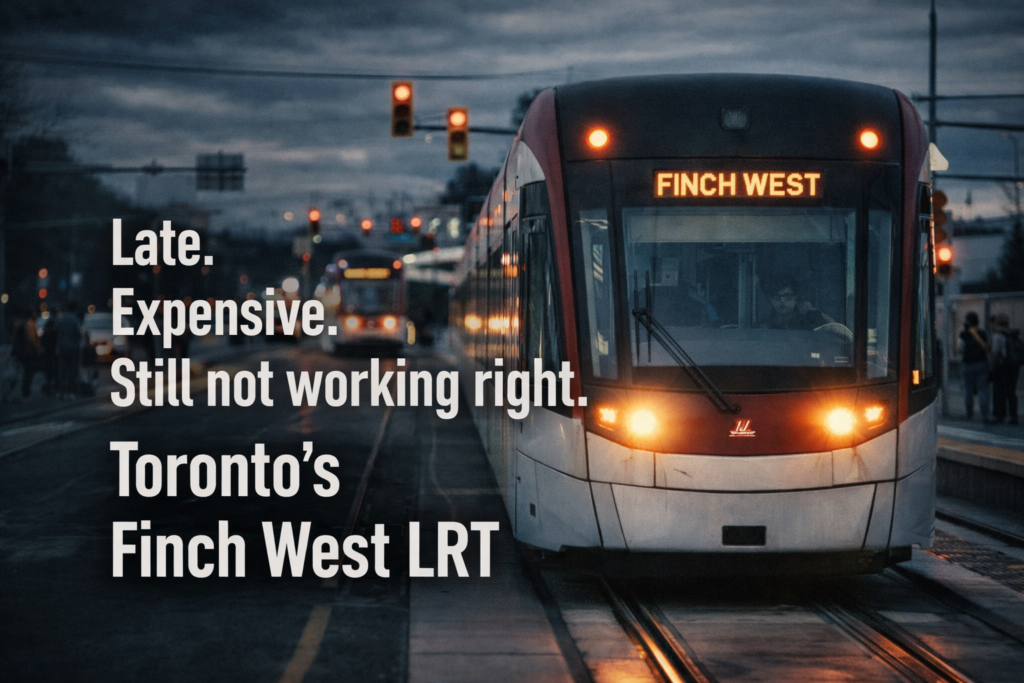
The Eglinton Crosstown finally opened in February 2026, roughly six years late, after a saga so messy that even Metrolinx leadership has had to acknowledge its history of delays, cost overruns, and legal warfare. The Finch West LRT has also been dragged through court fights and delay disputes.
So when residents are told, once again, that libraries, parks, community spaces, and local infrastructure need to wait because the finances are tight, they might be forgiven for asking a rude question:
Tight for who?
Because there always seems to be enough money, enough patience, and enough excuses for megaproject dysfunction. But when it comes to the everyday infrastructure residents actually use, suddenly everyone in power rediscovers the value of restraint.
Amazing system. Truly.
The city is not making this up — but it is packaging it carefully
To be fair, Toronto is dealing with real financial pressure. The city has said provincial changes through Bill 17 are expected to create both cash-flow deferral impacts and permanent recurring revenue loss tied to development charges. That matters, because it means some of this problem is structural, not just political.
But that does not erase the political choice in how the story is being packaged.
The city is still selling an affordability narrative. The public messaging emphasizes that the 2.2% increase is below inflation. It leans heavily on affordability and service stability.
What gets less attention is that “affordability” becomes a very convenient headline when the real cost is simply pushed into the future.
Because deferred infrastructure is still a cost. It just shows up later, and in ways that are harder to ignore once they pile up: overloaded amenities, slower project delivery, fewer local spaces, more frustration, and a city that feels increasingly crowded without feeling more complete.
What residents should be asking
The real question is not whether Toronto should keep taxes low. The real question is this:
What exactly are residents getting in return when the city boasts affordability today, but the infrastructure needed for tomorrow keeps slipping?
If Toronto keeps approving growth while libraries, parks, community spaces, and other public infrastructure get deferred, then “affordability” starts to sound less like relief and more like delay.
Delay in paying.
Delay in building.
Delay in delivering what a functioning city is supposed to provide.
That is the credibility gap hiding inside this budget. Toronto is not just facing a funding problem. It is facing a trust problem: a city that keeps promising growth, affordability, and stability while quietly pushing the infrastructure behind all three further out of reach.
Strong closer
The budget message is simple: smile for the cameras, praise the restraint, and try not to notice that the city you were promised keeps arriving later and later — if it arrives at all.
Coming soon from WTFTO
If this budget is the polished sales pitch, the next stories are the receipts.
Because this is not just about one budget. It is part of a bigger Toronto pattern: money gets spent, priorities get distorted, and residents are told to be patient while the basics somehow keep falling further behind.
Coming soon:
• Toronto’s spending trend: where the money keeps going, and what never seems to get fixed
• Road repair theatre: somehow everywhere, always, and never quite done
• Bike-lane political theatre: endless fighting, endless posturing, and no shortage of slogans
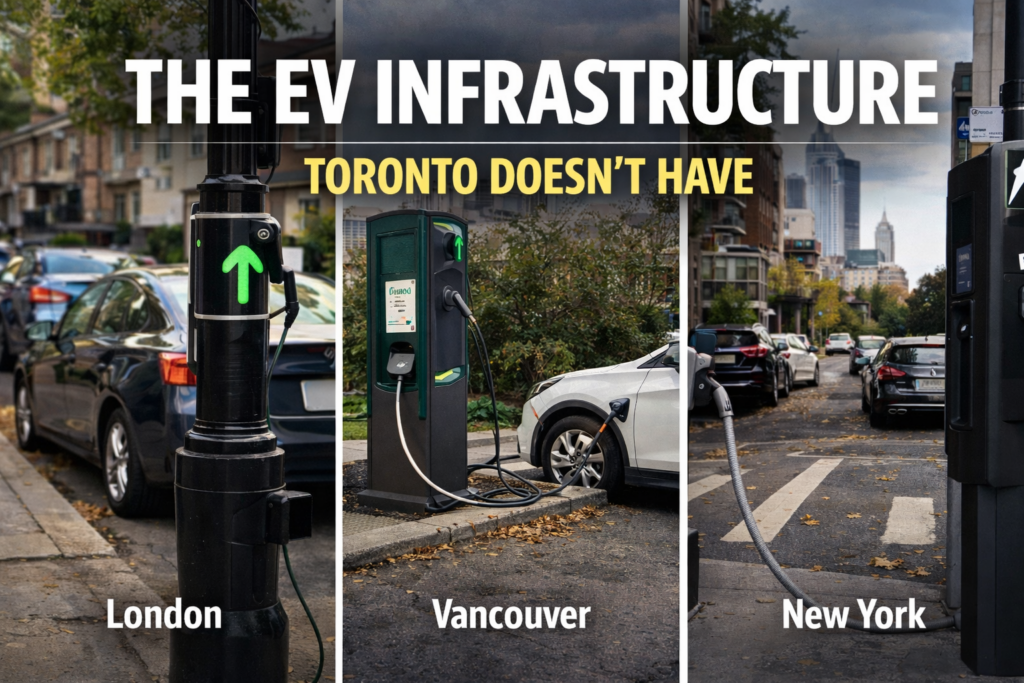
• EV charging shortfalls: a city that loves talking about the future, while many residents still cannot easily plug into it
2 Comments
be respectfulLeave a comment
More Stories
I think It’s important to keep an eye on what Toronto does with our money , especially when they keep raising taxes
Exactly. If Toronto wants more from residents, residents deserve clear answers on where the money goes.